

Astronomy Presenter, Creative Director & Producer of Attractions and Experiences
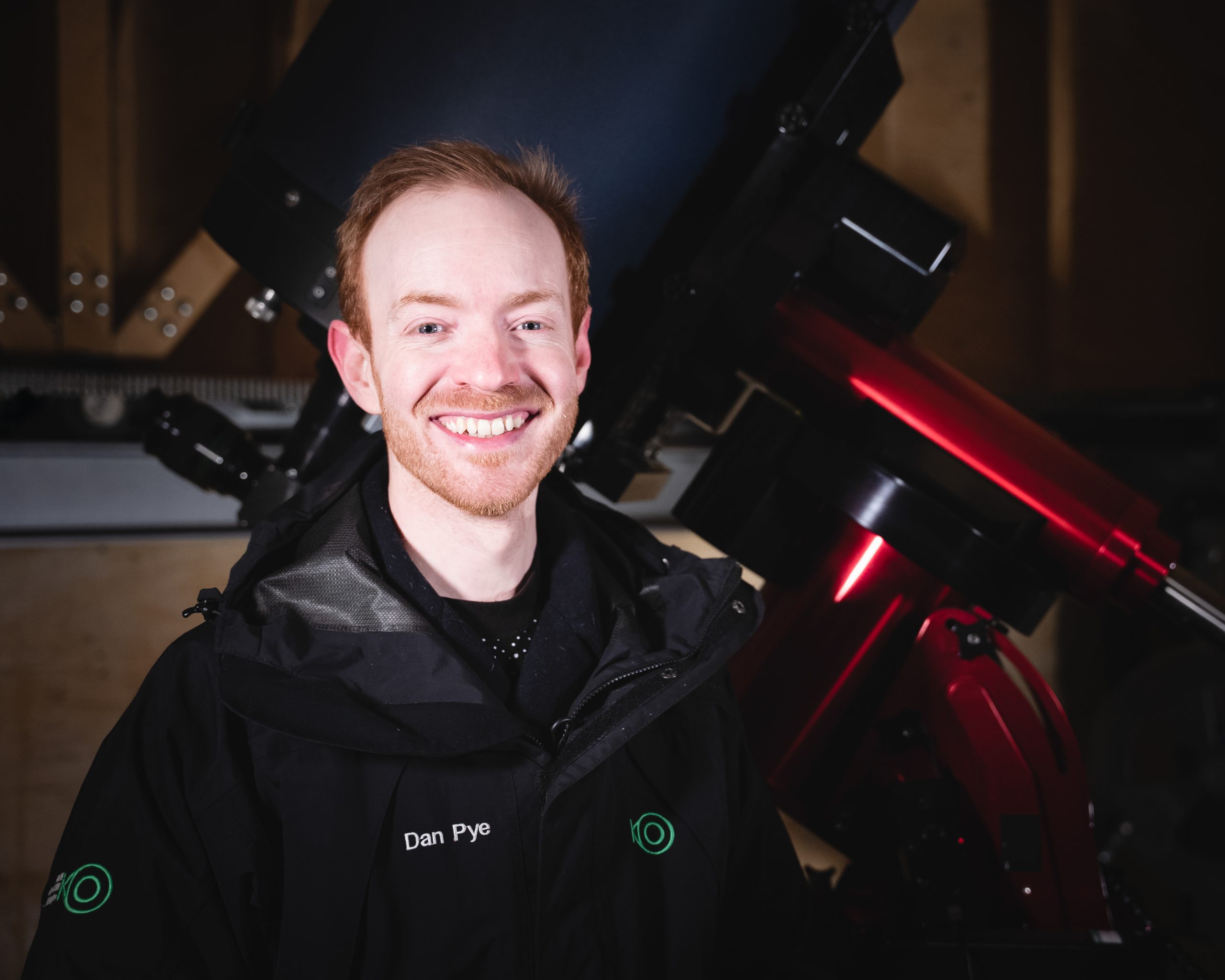
Director of Astronomy and Science Communication (Deputy CEO)
Kielder Observatory, Northumberland
“Star gazing has been a huge passion of mine since I was a kid, and now to be able to work in Astronomy Outreach daily is incredible. I get to share my knowledge and passion for astronomy, and help enthuse, inspire and educate people across the country. Kielder Observatory is a very special place to visit. As the largest outreach facility for optical astronomy outreach in the country, it’s a spectacular place to visit, regardless of the weather.”
Alongside his work as an award-winning Voice Actor, Dan Pye is the Director of Astronomy and Science Communication and Deputy CEO at Kielder Observatory, one of the UK’s leading public astronomy organisations, located beneath the largest protected Dark Sky area in Europe.
Each year, Kielder Observatory engages around 50,000 people through immersive astronomy experiences, science communication events, schools outreach, media appearances and public stargazing activities both on-site and across the UK.
As part of his role, Dan oversees day-to-day operations, creative programming, event curation and long-term development, while also presenting astronomy and space-related subjects to public audiences through live events, television, radio and private engagements. From black holes and the origins of the Universe to meteor showers and the mythology of the night sky, Dan specialises in making complex science feel accessible, cinematic and entertaining.
Astronomy and science communication have taken Dan around the world to some of the planet’s most spectacular dark sky locations, combining travel, storytelling and exploration with a lifelong passion for the cosmos.
Dan is available for:
- Astronomy and science public speaking
- Television and radio appearances
- Science and space themed hosting
- Festival and live event appearances
- Interviews and panel discussions
- Private stargazing experiences
- Educational and corporate events
Whether speaking to theatre audiences, leading live stargazing experiences or appearing on broadcast media, Dan brings warmth, humour and a strong sense of wonder to every event.
To enquire about booking Dan for talks, appearances or private astronomy experiences, please get in touch.
Navigating the Sky
When you first step outside beneath a clear night sky, it can feel overwhelming. Thousands of stars scattered overhead, constellations crossing the darkness, planets shining among them… where do you even begin?
One of the easiest and most rewarding ways to start understanding the night sky is by learning the constellations.
Constellations are patterns of stars that humans have used for thousands of years to help map and navigate the heavens. They’re a little like giant cosmic dot-to-dot drawings stretched across the sky, often representing mythological figures, animals or objects. Once you begin recognising a few key constellations, the night sky suddenly starts to feel far more familiar, helping you locate stars, planets and deep sky objects more easily.
Of course, some constellations require a healthy dose of imagination. A handful look less like heroic hunters and mythical beasts and more like someone accidentally dropped a box of luminous breadcrumbs across the Universe. Many of these star patterns originate from Greek and Roman mythology… and history suggests the storytellers of the ancient world may have enjoyed a generous amount of wine while connecting the dots.
One of the best ways to begin learning the night sky is by using astronomy software such as Stellarium.
Stellarium is a free planetarium programme available for Windows, Mac and Linux, and it’s one of the most powerful tools available for beginners and experienced stargazers alike. It allows you to explore the night sky in real time, identify constellations, track planets and understand how the sky changes throughout the seasons and across the night.
To download Stellarium and begin exploring the night sky for yourself, visit Stellarium.org